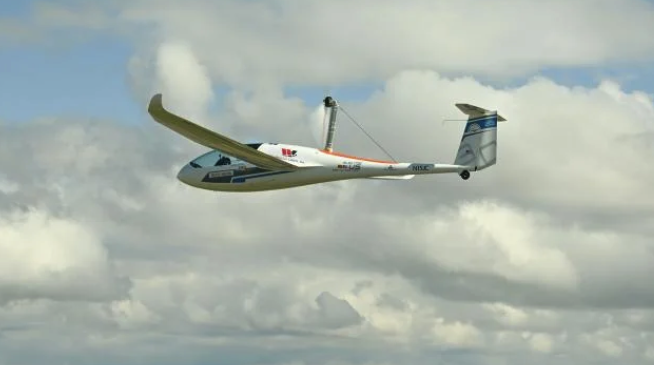
ABOVE: As well as a regenerative system that recharges the batteries via the prop during the descent, Horizon also features solar cells on the wings
In what could be a real breakthrough for electric aviation, the first flight of a crewed electric aircraft using solid-state batteries took place in Florida in May. The new batteries were installed in a modified Pipistrel motor glider called the Helios Horizon, and a series of flight tests were flown, primarily done to validate the weight and balance of the new storage system, which replaced a standard wet-cell lithium ion setup. The increased capacity of the solid-state cells is already claimed to be 410 watt/hrs per kilogram, a 60% increase over lithium ion batteries.
To put this into perspective, Avgas has 12-13,000 Watt hour (Wh) per kilogram of energy density, but the much heavier internal combustion engines and their relatively inefficient conversion of energy (25% to 40%) significantly degrade that advantage.
The Horizon also uses a regenerative system that recharges the batteries via the prop during the descent, and features solar cells on the wings. The combination of these two systems is claimed to significantly extend the motor glider’s range.
Electric car manufacturers are already pouring billions into bringing solid-state batteries to market, and systems capable of 500 Wh/kg are being tested. Miguel Iturmendi, who owns Helios and flew the glider in Florida, said he expects the solid-state performance to increase by another 40% within two years. The other advantage of the system is its fast charging capability. Helios claims it can be charged to 80% in fifteen minutes.
PHOTO: JAMES DARCY/HELIOS HORIZON