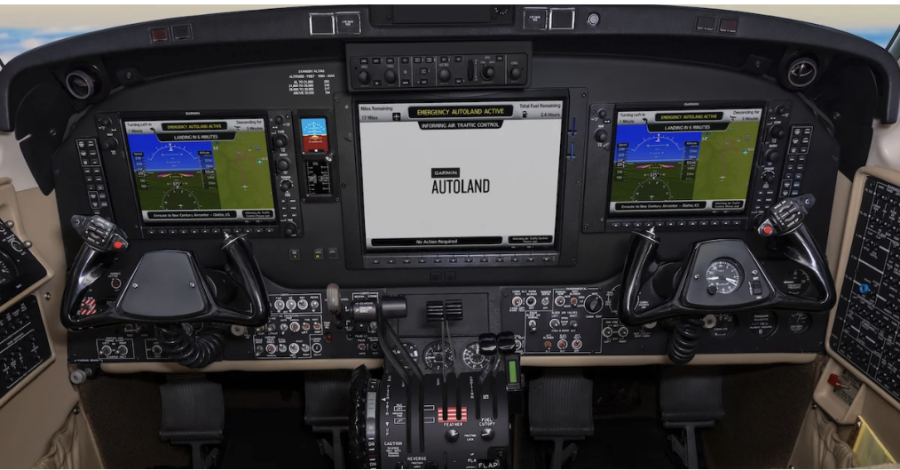
ABOVE: In the event of a depressurisation, if the pilots do not intervene, the Autoland sequence begins automatically
The FAA is investigating the activation of the Garmin Autoland system on a King Air 200 in Colorado which occurred in late December, the first time the system was used in history. The agency declined to elaborate on the nature of its investigation, but CBS News reported a pressurisation issue was involved in the Autoland activation.
In a twist to the original assumption that the pilots were incapacitated, it is reported that the local fire department was puzzled by the emergency response to the airport, since neither of the men on the aircraft required treatment or transport to a hospital. In the event of a depressurisation, the Garmin system immediately begins an emergency descent to 15,000ft and, if the pilots do not intervene, the Autoland sequence begins automatically.
A recording of the airport’s tower frequency includes a robotic female voice declaring pilot incapacitation and the intention to land on Runway 30. The aircraft landed successfully and there have been no reports of injuries.
Chris Townsley, CEO of Buffalo River Aviation (the operator of the King Air), said in a statement: ‘As the plane climbed through 23,000ft from Aspen on its way to Rocky Mountain Metropolitan Airport in Broomfield, it suddenly depressurised. The pilots put on oxygen masks and let the Autoland system take over. The two pilots were the only occupants on a ferry flight. They remained alert for the entire episode and did not require any medical treatment after the autonomous landing. The Autoland system used the term ‘pilot incapacitation’ in its automated radio calls to air traffic control. Garmin has confirmed it was the first non-test use of its Autoland system’.
PHOTO: GARMIN